Chinese Wedding Decoration Ideas Malaysia Couples Are Booking in 2026
Most Chinese wedding decoration ideas Malaysia couples save to a mood board were styled for a Western venue with a twelve-hour build window and dry air. A Kuala Lumpur hotel ballroom gives you four to six hours between lunch and dinner service, roughly 85% relative humidity in the loading bay, and a no-open-flame policy that quietly kills the dragon-and-phoenix candles. This is what is actually being designed and built here this year — and what the venue rules do to it.
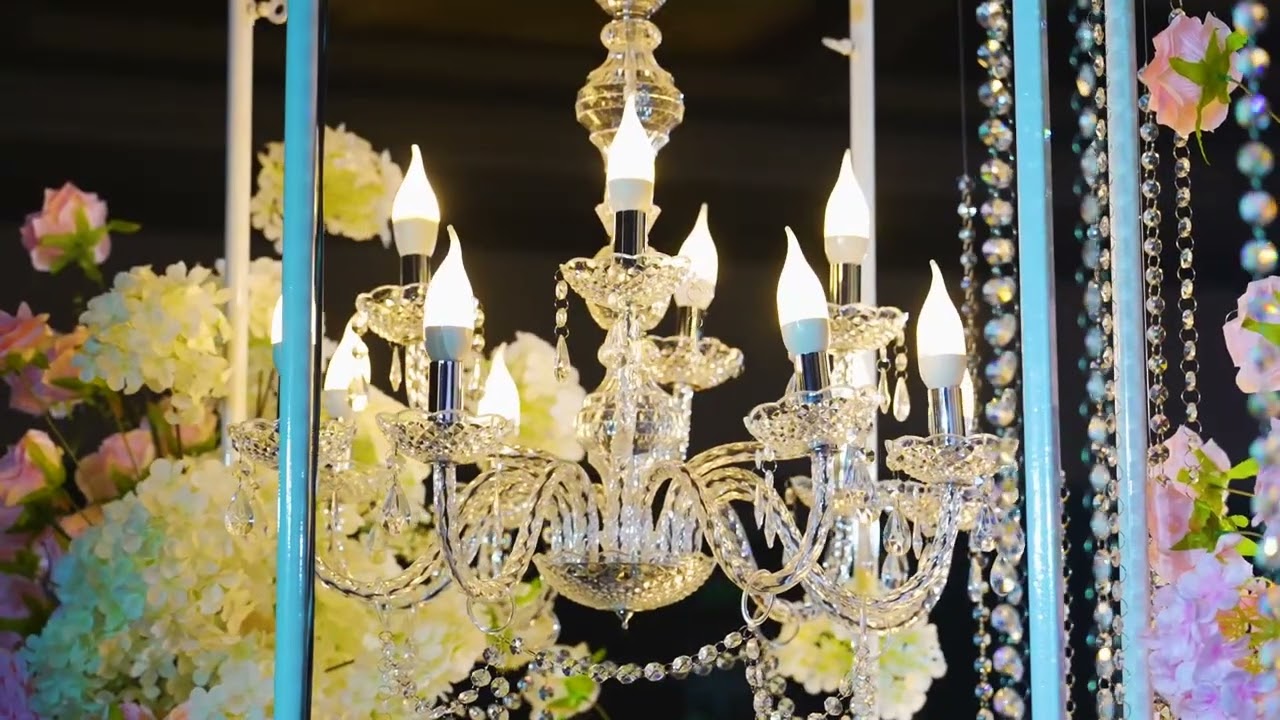
Design the ceremony calendar first, the ballroom second
The single most common planning error is treating the dinner as the wedding. In a Malaysian Chinese wedding the decoration budget is spread across four or five separate moments, most of which happen in a condominium unit or a terrace house at an hour when nobody has had coffee yet. Each has its own set-up crew, its own access problem, and its own photographic value.
Here is how a typical two-day sequence in the Klang Valley breaks down, with the decoration elements each moment actually needs.
| Moment | Typical time | Where | What gets decorated | Indicative RM |
|---|---|---|---|---|
| 过大礼 — betrothal gift exchange | 2–6 weeks before, morning | Bride's family home | Gift trays, sealed baskets, ribboned roast pig box, small entry arrangement | 800 – 2,500 |
| 安床 — bed setting | 1–3 days before, auspicious hour | Marital bedroom | Bed dressing, 囍 window decals, dragon-phoenix bedding, longan and lotus seed bowl | 400 – 1,500 |
| 上头 — hair combing | Night before, ~11pm | Both family homes | Small altar table, candles (LED where the condo bans flame), fruit and comb tray | 300 – 900 |
| Gate crash + 敬茶 — tea ceremony | Wedding morning, 5.30–9am | Corridor, living room | Door arch or corridor styling, tea ceremony backdrop, tea table, cushions, floral corners | 1,800 – 6,500 |
| Dinner reception | 6.30pm onward | Hotel ballroom or restaurant | Stage backdrop, entrance moment, aisle, centrepieces, photo wall, cake and cocktail area | 12,000 – 90,000+ |
Two practical consequences. First, the morning items are built by a small team in a lift lobby with a management office watching, so anything over 2.1 metres tall or requiring adhesive on painted walls has to be freestanding and self-weighted. Second, if the tea ceremony is at 6am and the ballroom build starts at 1pm, you are paying for two crews, not one — that is a scheduling reality worth knowing before you compare quotations. We covered how to read those line items in what to ask a wedding decorator before booking.
Chinese wedding decoration ideas Malaysia designers are building this year
The 囍 wall, rebuilt as architecture
The double happiness character is non-negotiable for most families, and for years it appeared as a vinyl decal stuck on a plain backdrop. The current direction treats it as a built object. Three approaches we fabricate most often:
- Laser-cut acrylic, 5mm, edge-lit. A 1.2m 囍 in 5mm frosted acrylic with a hidden LED strip along the bottom edge reads clean at distance and photographs without hotspots. Thinner 3mm sheet warps under gantry heat within an hour — use 5mm for anything above 900mm.
- Powder-coated steel, matte champagne. Repeated at three scales across a backdrop — one hero character, two mid, a scatter of 150mm units — so the motif reads as pattern rather than signage. Heavier, needs a weighted base or a truss tie, but survives outdoor humidity in a way acrylic does not.
- Negative space. The character cut out of a solid panel with the wall or a floral bed showing through. This is the version that photographs best on a phone camera because the contrast is structural, not printed.

Oxblood, not pillar-box red
Red is required. The shade is not. The clearest shift over the past two seasons has been away from saturated primary red toward deeper, dustier reds carried by champagne gold rather than yellow gold. This solves a real photographic problem: pillar-box red under warm tungsten ballroom lighting bleeds orange on camera and turns skin tones ruddy.
| Red family | Reads as | Best paired with | Watch out for |
|---|---|---|---|
| Oxblood / burgundy | Formal, modern, expensive | Champagne gold, blush, deep green foliage | Disappears entirely at low light levels — needs uplighting |
| Cinnabar / brick red | Traditional but warm | Antique brass, ivory, dark timber | Clashes with cool white LED; specify 2700–3000K |
| Classic Chinese red | Unambiguously auspicious | Bright gold, black lacquer | Bleeds orange on camera under tungsten; use sparingly on large flat areas |
| Peach and coral accents | Soft, contemporary | Oxblood base, cream, gold | Reads pink to older guests — keep it as accent, never the base |
| Jade green as counterpoint | Heirloom, Peranakan | Cinnabar, gold, dark wood | Fresh jade-toned foliage browns fast; use preserved or painted |
Peranakan detail — the direction that is genuinely Malaysian
If you want a scheme that could not have come off an international Pinterest board, Peranakan reference is the strongest available. The vocabulary is specific: peony and phoenix motifs from kamcheng jars, the pastel-and-jade palette of Straits porcelain, geometric encaustic floor tiles, carved timber pintu pagar half-doors, and beaded kasut manek slipper patterns translated into embroidery or laser-cut screens.
The way this works in practice is restraint — one motif carried consistently across three touchpoints, not a museum of everything. A common build: tile pattern on the aisle runner and the cake table cladding, kamcheng jars as low centrepiece vessels, and a fretwork screen behind the stage. Nothing else Peranakan. It holds together because the pattern repeats.
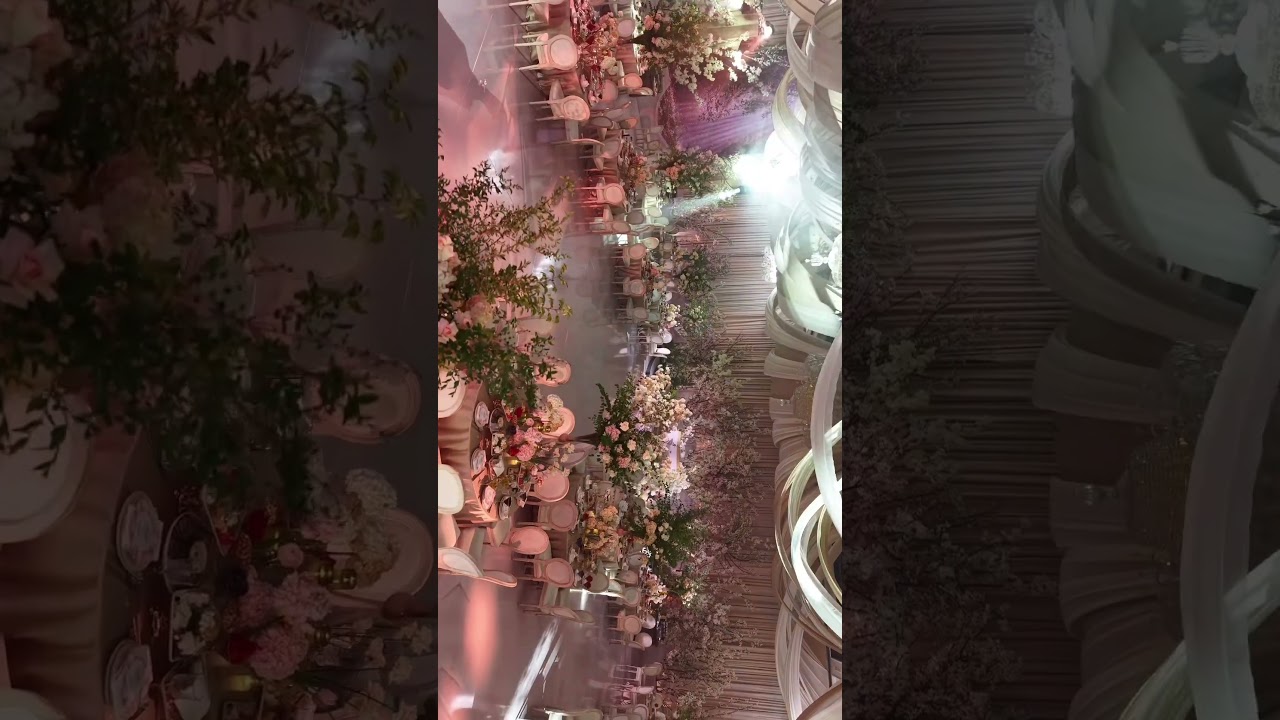
Hiasan perkahwinan Cina: what dewan and hotel ballroom rules do to the design
Every idea above meets a building. These are the constraints that most often force a redesign, drawn from builds at St Regis KL, Grand Hyatt KL, Shangri-La KL, W KL, Four Seasons and Mandarin Oriental, and from community dewan and Chinese restaurant halls across Selangor.
- Open flame. Dragon-and-phoenix candles (龙凤烛) are traditionally lit and left burning. Most five-star ballrooms will not permit it. The accepted substitute is a resin or wax-shell candle with a warm flickering LED core — visually near-identical on camera and acceptable to almost every family once explained. Ask the venue in writing; policies differ between the ballroom and the private function rooms of the same hotel.
- Rigging. Several KL ballrooms prohibit drilling into ceiling slabs entirely, so a hanging floral installation over the head table has to load through existing rigging points or sit on ground-supported truss. Ground support eats floor area you were counting on for tables.
- Turnaround. A hotel running a lunch event releases the room around 2pm for a 6.30pm reception. Four to six hours covers strike of the previous set, your build, AV focus and a banquet re-set. Anything requiring adhesive cure time or fresh-floral foam soaking on site is at risk.
- Service lift. Measure it. A 2.4m backdrop panel that will not enter a 2.1m lift car has to be built in sections with concealed joints — a fabrication decision, not a site decision, and one that must be made weeks earlier.
- Corridor and door width. For the morning gate-crash, condominium corridors are typically 1.2–1.5m. A double-sided floral arch designed for a garden will block the fire escape route and the building management will make you remove it.
- Restaurant halls. Chinese restaurant banquet halls often have fixed pillars, low soffits and existing gold-and-red house décor you cannot remove. Design with the pillars — wrap two of them as deliberate elements — rather than pretending they are not there.
Tea ceremony staging that survives a 6am start
The 敬茶 tea ceremony produces more printed photographs than any other part of the day, and it is the moment most under-designed. It happens in a living room with fluorescent downlights, a sofa nobody moved, and eleven relatives standing in frame.
What actually improves it, in order of impact:
- Control the background before adding anything. A 2m freestanding fabric or fretwork panel behind the seated parents removes the television, the shoe rack and the air-conditioner from every photograph. This one item outperforms every floral spend in the room.
- Two chairs that match. Rented carved timber or upholstered chairs in place of dining chairs. Small cost, disproportionate effect.
- A low tea table dressed properly. Red tray, tea set, a compact arrangement no taller than 200mm so it does not sit between the couple's faces and the camera.
- Light. One battery LED panel bounced off a ceiling, gelled warm. Malaysian living rooms at 6am are lit by 4000K downlights that make red fabric look brown.
- Floor. Two kneeling cushions in matching fabric. They appear in every frame from the waist down.

Materials that hold up in 85% humidity
Malaysian humidity is the invisible variable in every decoration decision. Fabric behaves differently, adhesives behave differently, and anything that travels from an air-conditioned truck into a hot loading bay will condense.
| Material | Behaviour in Malaysian conditions | Use it for | Avoid it for |
|---|---|---|---|
| Velvet (poly, not cotton) | Holds colour and nap; heavy, does not flutter under air-con vents | Tea ceremony panels, cake table cladding, chair backs | Any outdoor or garden ceremony — it holds heat and shows sweat marks |
| Silk / faux silk drape | Wrinkles fast, and steaming on site is a fire-alarm risk in most ballrooms | Short runs that can be steamed off site and hung same-day | Long backdrop drops built the morning of the event |
| Organza and chiffon | Stable, forgiving, cheap to replace | Layered aisle and ceiling effects, soft diffusion over LED | Anything that needs to read as expensive up close |
| Acrylic, 5mm | Warps above roughly 40°C; fine in conditioned ballrooms | Edge-lit 囍 characters, signage, table numbers, cake stands | Outdoor daytime, marquee, or near par-can fixtures |
| Powder-coated steel | Fully stable; needs bases or ties | Structural motifs, arches, freestanding screens | Anything the client wants to carry home afterwards |
| Fresh peony (imported) | Ships from Kunming or the Netherlands; opens fast in heat, 6–10 hours out of cooler | Head table, bridal bouquet, hero moments | All-day outdoor use, or arrangements built before noon for a 9pm photo |
| Preserved and silk florals | Indifferent to humidity, reusable, no cooler chain | Structural installations, high-level work, morning ceremonies | Anywhere guests will touch and inspect at close range |
Peony deserves a note of its own because it is the flower most requested for Chinese weddings and the one most likely to disappoint. It is not grown commercially in Malaysia, arrives as a tight ball, and needs one to three days at room temperature to open — which means the confirmation window with a florist is ten to fourteen days, not three. Our full breakdown of what survives here is in tropical wedding flowers in Malaysia.

Eight mistakes we see most often
- Budgeting only for the dinner. The morning ceremonies are a second crew, a second call time and a second vehicle. They are usually 10–20% of the total, discovered late.
- Approving a palette on a bright laptop screen. Ballrooms are dim and warm. Ask to see the fabric swatch under 2700K light, not on a monitor.
- Buying a 3mm acrylic 囍 because it quoted cheaper. It bows within an hour under gantry heat and the photographs show it.
- Assuming candles can be lit. Confirm the venue's open-flame policy in writing at booking, not at rehearsal.
- Designing an arch for a corridor. Measure the actual condominium corridor and the fire escape clearance before committing to a gate-crash entrance.
- Mixing three cultural vocabularies. Peranakan porcelain, classical Chinese lattice and modern minimalism in one room reads as indecision. Choose one and repeat it.
- Forgetting the reverse angle. The tea ceremony is shot from behind the couple as often as in front. Whatever is behind the videographer ends up in frame.
- Leaving the cake and cocktail area undesigned. Guests spend forty minutes there before doors open. It is the highest-traffic surface of the night and often gets nothing.
Frequently asked questions
Which Chinese wedding decoration ideas Malaysia venues most often reject?
Lit dragon-and-phoenix candles, ceiling-drilled floral installations, anything using confetti or loose petals on ballroom carpet, and adhesive fixings on painted or timber-clad walls. All four have straightforward substitutes — LED-core candles, ground-supported truss, contained petal arrangements and freestanding weighted panels — but they must be designed in from the start, not swapped on site.
How far ahead should decoration be confirmed?
Eight to twelve weeks for a custom-fabricated ballroom scheme, because steel and acrylic fabrication runs three to four weeks and imported florals need a ten to fourteen day confirmation. Peak dates — the auspicious weekends either side of Chinese New Year and the September to December run — are booked earlier than that.
Can a Chinese scheme and a Western white scheme work at the same wedding?
Yes, and it is the most common brief we receive. The reliable split is by moment rather than by mixing within a room: traditional red for the morning ceremonies and the guest entrance, restrained oxblood-and-champagne for the dinner. A single unifying element carried through both — the same gold finish, the same floral variety — stops it reading as two separate events.
What about a garden or outdoor ceremony?
It changes the material list more than the design. Acrylic and fresh peony both come off the table for daytime outdoor use; powder-coated steel, preserved florals, orchids and heliconia go on it. Build in a wet-weather position and confirm who calls the switch, and by what time.
Planning a Chinese wedding in KL or Selangor?
We design, fabricate in our own factory and install — from the 6am tea ceremony to the ballroom stage. Send us your date, venue and guest count and we will come back with a scheme and a cost range.