Hotel Ballroom Wedding Decoration Rules in Kuala Lumpur: What Your Decorator Can and Cannot Do
Hotel ballroom wedding decoration rules in Kuala Lumpur decide what your decorator can hang, light, burn and install long before anyone talks about colour. This guide sets out the limits we plan around in five-star ballrooms, with load-in windows, rigging, flame and haze restrictions, and the ringgit each one adds to a quotation. Every hotel writes its own policy, so read the figures as typical ranges, not a rulebook. The hotel's banquet team always has the final word.

Why hotels have rules, and why they hit your budget
A ballroom at the St Regis KL, Grand Hyatt KL, Shangri-La KL or W KL is a revenue room that turns over several times a week. A lunch function may finish at 3pm and your dinner starts at 7:30pm, so the hotel protects three things: the ceiling and fire systems, the floor and carpet, and the timetable. Your decorator works inside those limits, and each limit turns into labour, engineering or hold fees on the quote. Couples who learn the rules before choosing a design avoid the late redesign that costs the most.
Hotel ballroom wedding decoration rules in Kuala Lumpur at a glance
| Rule area | Typical hotel position | What it changes | Indicative RM impact |
|---|---|---|---|
| Ceiling rigging | Fixed approved points only, with a weight limit per point; no drilling or clamping to ceiling grid | Heavy floral clouds or hanging installations may be refused or re-engineered | 1,500 – 6,000 for rigging plan, extra crew or ground-supported alternative |
| Load-in window | Starts after the previous function ends; sometimes only 3 to 5 hours | Large builds must be pre-assembled off-site and installed in modules | 2,000 – 8,000 more crew; 3,000 – 10,000+ if the room is held the night before |
| Floor protection | Heavy items need boards or mats; no dragging; no adhesive on carpet | Stage decks and walls need protective layers | 500 – 2,500 |
| Naked flame | Often banned or limited to enclosed candles; fire marshal may need notice | LED or enclosed candle designs replace open flame | Usually neutral; LED hire 300 – 1,500 |
| Haze, fog, dry ice, cold spark | Needs approval; smoke detectors may have to be isolated by hotel engineers | Entrance effects may be cut or moved to the foyer | 800 – 3,000 for engineer standby where allowed |
| Wall fixing and signage | No nails, tape or paint on walls; freestanding only | Backdrops need their own frames and ballast | Built into fabrication cost |
| Vendor access and insurance | Crew list, public liability certificate, sometimes a vendor levy or deposit | Paperwork lead time of a few days | 300 – 2,000 plus refundable deposit |
These are indicative planning figures from our own installs, not a hotel price list. Ask for the hotel's written vendor guidelines before you sign anything.
Rigging and ceiling height: what can actually hang
Weight and approved points
Most five-star ballrooms in Kuala Lumpur allow hanging only from approved rigging points, and each point has a safe working load. A fabric canopy or a light chandelier may pass easily, while a floral cloud of fresh stems on a steel frame, often 80 to 200 kg wet, can exceed what a point permits. Ask for the rigging plan early. If the hotel allows the load, an engineer or the hotel's own rigger usually signs it off. If it does not, your decorator should offer a ground-supported option such as truss towers or a freestanding frame, not discover the problem on installation day.
Ceiling height and pillars
Ballroom ceilings vary a great deal, roughly from 4.5 m in older rooms to 8 m or more in grand ballrooms, and some pre-function areas are lower again. Low ceilings cap stage height and rule out tall hanging drops. Pillars and chandeliers set the sightlines, so the aisle, stage and walkway must be drawn on the hotel's own floor plan. Our hotel ballroom vs dewan comparison shows how these constraints differ from a typical dewan.
Load-in windows: the rule that shapes everything
Time is the hardest constraint, because a design that needs 9 hours cannot be installed in 4. The table below shows how access scenarios change what a decorator can build.
| Access scenario | Typical window | What is realistic | Planning note |
|---|---|---|---|
| Room held the night before | 10 to 14 hours | Full custom stage, hanging elements, lighting focus | Hotels often charge room hire for the night, so ask early |
| Free morning, dinner wedding | 8 to 9 hours | Complete build with fresh florals last | Best value if the room has no lunch function |
| After a lunch function | 3 to 5 hours | Modular stage, pre-built panels, minimal hanging | Fresh flowers go in during the final 90 minutes |
| After a morning wedding, same-room evening turn | 2 to 3 hours | Re-dress only; no new structures | Rare; confirm in writing |
The practical answer is fabrication off-site. Because we run our own factory, we pre-build stage modules and test-fit them, so ballroom time goes on installation, not construction. Our rental vs custom built guide explains how that changes lead times and cost.
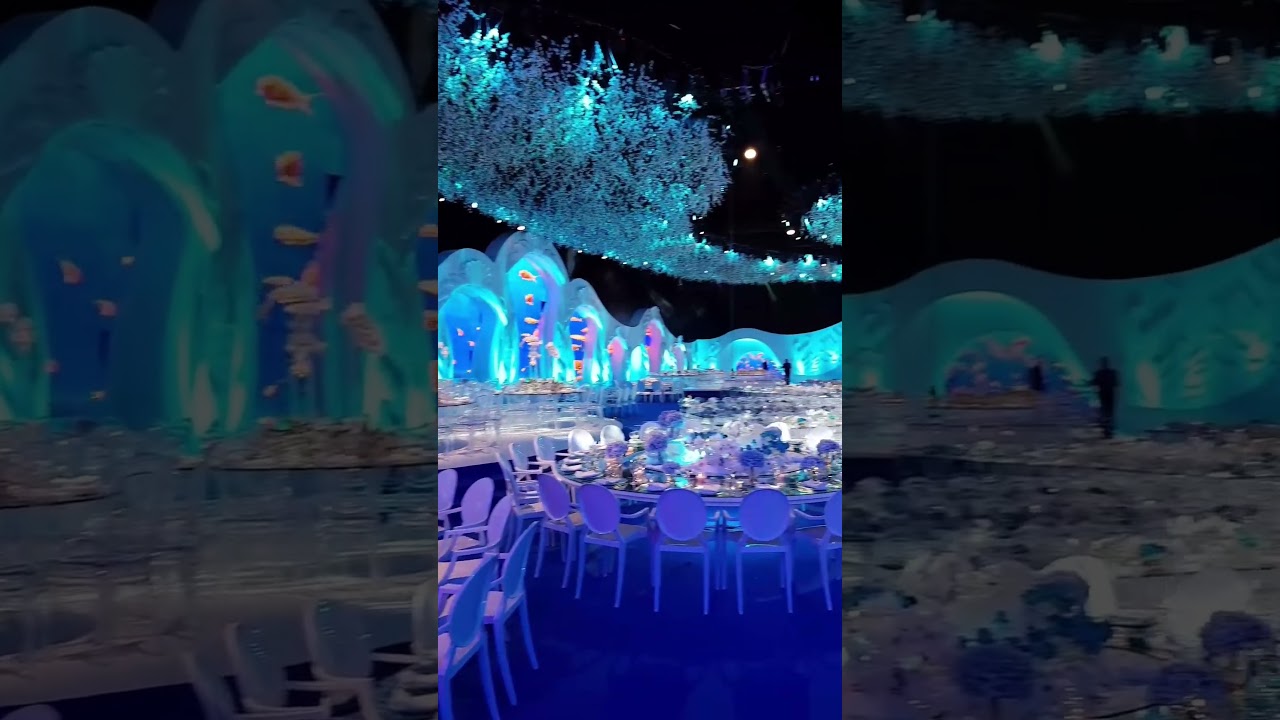
Naked flame, haze and special effects
Candles are the most common surprise. Many hotels ban open flame in banquet halls or restrict it to enclosed vessels, and some require the fire marshal to be told in advance. LED pillar candles and warm-white lamps solve the look at lower risk. Haze machines, dry-ice entrances and cold-spark fountains are tougher: smoke detectors can trigger evacuation alarms, so the hotel may need to isolate detectors in that zone with an engineer on standby, or may simply say no. If a grand entrance with fog matters to you, raise it at the first meeting, not in the final week. For other entrance ideas that work within these limits, see our wedding entrance decoration ideas.
Peraturan hiasan perkahwinan di hotel dan dewan
For couples planning a majlis perkahwinan, the rules differ between a hotel and a dewan. A dewan is often more relaxed on timing and may allow hiasan pelamin to be built the day before, but ceilings are lower, ceiling fans can restrict hanging, and tube lighting limits mood. Hotels give better power, loading access and engineering support but are stricter on flame, fixing and access times. Pelamin builds that rely on heavy carved backdrops should be designed in modules for a hotel lift or loading bay. Always ask the dewan management for a written list of what is not allowed, including tape, nails and open flame, before you finalise the pelamin design.
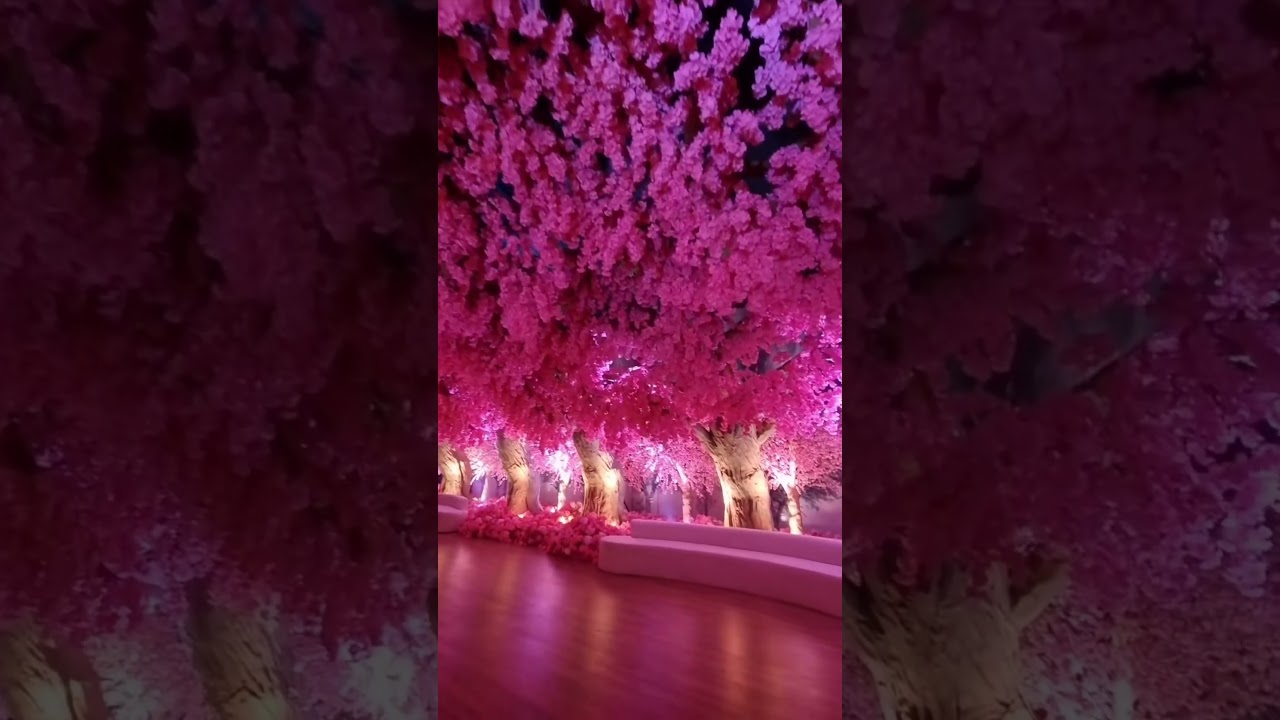
Fresh flowers, humidity and the cold ballroom
Ballrooms run cold, often around 20 to 22 degrees, while loading docks and corridors in Kuala Lumpur sit at 30 degrees and high humidity. Fresh flowers moved quickly between those two climates can show condensation and bruise. Good decorators condition stems in a chilled room, keep wet floral work off the carpet, and install water-fed pieces last. Hotels also care about water spills, petals on carpets and floor staining, which is one reason some halls require floor sheeting under floral work. Our guide to tropical wedding flowers in Malaysia covers what survives best.
Vendor access, insurance and deposits
Five-star hotels usually ask outside decorators for a crew list, identity cards for the loading bay, a public liability insurance certificate, and sometimes a refundable damage deposit or a vendor access fee. These items rarely appear in a decoration quote unless you ask. Compare quotes on a like-for-like basis, as we explain in what to ask a wedding decorator before booking, and confirm who pays each fee.
Seven questions to put to the hotel before you sign
- What time can our decorator start loading in, and what ends in the room before us?
- When must everything be cleared after the event?
- Where are the approved rigging points, and what is the safe load on each?
- Is open flame, haze, dry ice or cold spark allowed, and who approves it?
- What floor protection and fixing rules apply, including tape and adhesive?
- Which vendor paperwork, insurance and deposit do you need, and by what date?
- Can we visit the empty ballroom with our decorator, and can we have the venue floor plan in CAD or PDF?
Common mistakes with ballroom decoration rules
- Approving a hanging floral cloud before the hotel has confirmed rigging capacity.
- Assuming the room is free all day when a lunch function ends at 3pm.
- Planning candle-lit tables and learning in week one that open flame is banned.
- Promising a fog entrance without asking about smoke detector isolation.
- Using tape or adhesive on walls or carpet and losing the deposit.
- Leaving the vendor insurance certificate to the last minute.
- Booking a decorator who has never worked in that hotel, so every rule is a surprise.
How to use this before you book
Start with the hotel's written vendor guidelines, then put your shortlist of designs against the rules above. A good decorator will tell you in the first meeting which parts of a concept are risky, and will price the alternative instead of hoping. Browse our showcase work to see builds delivered in KL ballrooms, and see our services for stage, floral and fabrication options.
Frequently asked questions
Can an outside decorator work in a Kuala Lumpur hotel ballroom?
Usually yes, though many hotels require approval, vendor paperwork and insurance, and some list preferred suppliers. Ask before you sign with any decorator.
Are candles allowed at hotel weddings?
Open flame is often restricted. Enclosed candles or LED candles are the safer choice, and you should confirm with the hotel in writing.
How much time do decorators get to set up?
It ranges from about 3 hours after a lunch function to a full night when the room is held. The window decides how much can be built on site.
Is haze or fog allowed at a hotel wedding?
It depends on the hotel. Smoke detectors may need to be isolated by hotel engineers, and some halls refuse it altogether.
Planning a ballroom wedding?
We design and fabricate in our own factory, then install in venues across Kuala Lumpur, Selangor and nationwide. Send us your hotel, date and a few reference photos and we will flag the venue rules before you commit.