Rental vs Custom Built Wedding Decoration: A Malaysian Cost Guide
The rental vs custom built wedding decoration decision is not a taste question — it is a calendar and cash question, and in Malaysia it has to be settled roughly ten weeks before the event or it settles itself. This guide gives the RM bands for both routes across nine decoration categories, the charges that appear in rental quotations after you say yes, the sea-freight window that governs anything fabricated, and the point at which building a piece genuinely costs less than hiring one.

What "rental" and "custom built" actually mean on a Malaysian quotation
Almost nobody in the Klang Valley works at either extreme. When a decorator says rental, they usually mean one of three quite different things, and the price gap between them is larger than the gap between decorators.
Tier 1 — stock rental. The piece comes out of a warehouse in Balakong, Puchong or Shah Alam exactly as it is. You choose from photographs of things that already exist. Colour is whatever colour it was built in. This is the cheapest route and the fastest: a week's notice is often enough.
Tier 2 — rental with a custom skin. The structure is stock — a truss arch, a standard 4.8m backdrop frame, a modular plinth set — but the visible surface is new for you: fresh fabric, a new printed panel, new florals, a new acrylic name feature. Perhaps 70% of premium Klang Valley weddings sit here. You are paying rental on the bones and fabrication on the skin.
Tier 3 — full custom fabrication. The piece is drawn for your venue and built from raw material, either in a local workshop or in an overseas factory. Nothing about it existed before. It is yours at the end, or the decorator keeps it and discounts you for that right — which is a negotiable line, and one almost nobody negotiates.
Rental vs custom built wedding decoration: the item-by-item cost comparison
The figures below are indicative Klang Valley bands for a 350–450 pax wedding in 2026, decoration only. Rental figures are per event; fabrication figures are one-off build costs and assume the piece is then yours. They exclude venue charges, F&B and AV.
| Item | Rental (per event) | Custom built (one-off) | Which usually wins |
|---|---|---|---|
| Main stage backdrop / pelamin, 4.8–7.2m | RM3,500 – 14,000 | RM12,000 – 48,000 | Rental, unless the shape is unusual |
| Ceremony arch or photo frame | RM900 – 3,800 | RM3,200 – 11,000 | Rental — highest-turnover item in every warehouse |
| Carved or moulded feature wall (3D relief, fretwork) | RM6,000 – 18,000 if it exists at all | RM9,000 – 26,000 factory-made | Custom — stock rarely matches a brief |
| Aisle structures & walkway (12–20m) | RM2,200 – 8,500 | RM7,000 – 22,000 | Rental |
| Dining chairs (400 pax, Chiavari / Tiffany / wishbone) | RM6 – 22 per chair | RM180 – 620 per chair | Rental, always |
| Charger plates, glassware, cutlery upgrade | RM9 – 34 per cover | Not applicable — purchase only | Rental |
| Centrepieces, 40 tables (vessel + mechanics, no flowers) | RM48 – 160 per table | RM120 – 450 per table | Rental for glass; custom for signature vessels |
| Entrance gate / tunnel, 3–5m | RM2,800 – 9,000 | RM8,500 – 30,000 | Depends on reuse — see break-even below |
| Acrylic, neon or LED name signage | RM400 – 1,400 generic | RM650 – 2,900 with your names | Custom — a generic name sign is useless |
Two things stand out. First, the fabrication multiple is not constant: a rented arch costs roughly a quarter of a built one, while a custom name sign costs barely more than a generic rental. Second, the categories where custom wins are the categories nobody stocks, because stock only exists where demand repeats. For the wider budget picture this sits inside, see our breakdown of how much wedding decoration costs in Malaysia.
Why a rented arch costs a quarter of a built one — the decorator's maths
Understanding this changes how you negotiate. A decorator who fabricates a RM9,000 arch is not pricing your hire against RM9,000. They are pricing it against the number of times that arch will leave the warehouse before it stops looking new.
In Malaysian humidity that number is lower than people assume. Painted MDF chips at every corner in transit. Powder-coated steel survives, but the coating dulls after roughly a dozen installs. Upholstered or fabric-wrapped surfaces are the worst — the fabric is usually replaced after four to six outings, which is a re-skin cost, not a rental cost. So the arch must earn back its build cost, its storage footprint, its refurbishment and its transport before it makes anything.
| Build cost of the piece | Typical hire rate | Outings to break even | Realistic service life |
|---|---|---|---|
| RM3,200 powder-coated arch | RM950 | 4 | 15–25 outings |
| RM9,000 fabric-wrapped backdrop | RM3,400 | 4–5 | 6–10 outings before re-skin |
| RM26,000 carved feature wall | RM11,000 | 3 | 8–14 outings, panels replaceable |
| RM620 wishbone chair × 400 | RM18 each | 34 | 60–90 outings with repairs |
The practical consequence: ask to build, and pay for the build, only when the piece will not be rented out again — a name feature, a family crest, an architectural element matched to one ballroom's proportions. For anything generic, you are being offered a piece that has already paid for itself several times over, and the hire rate reflects that. That is a good deal, not a compromise.
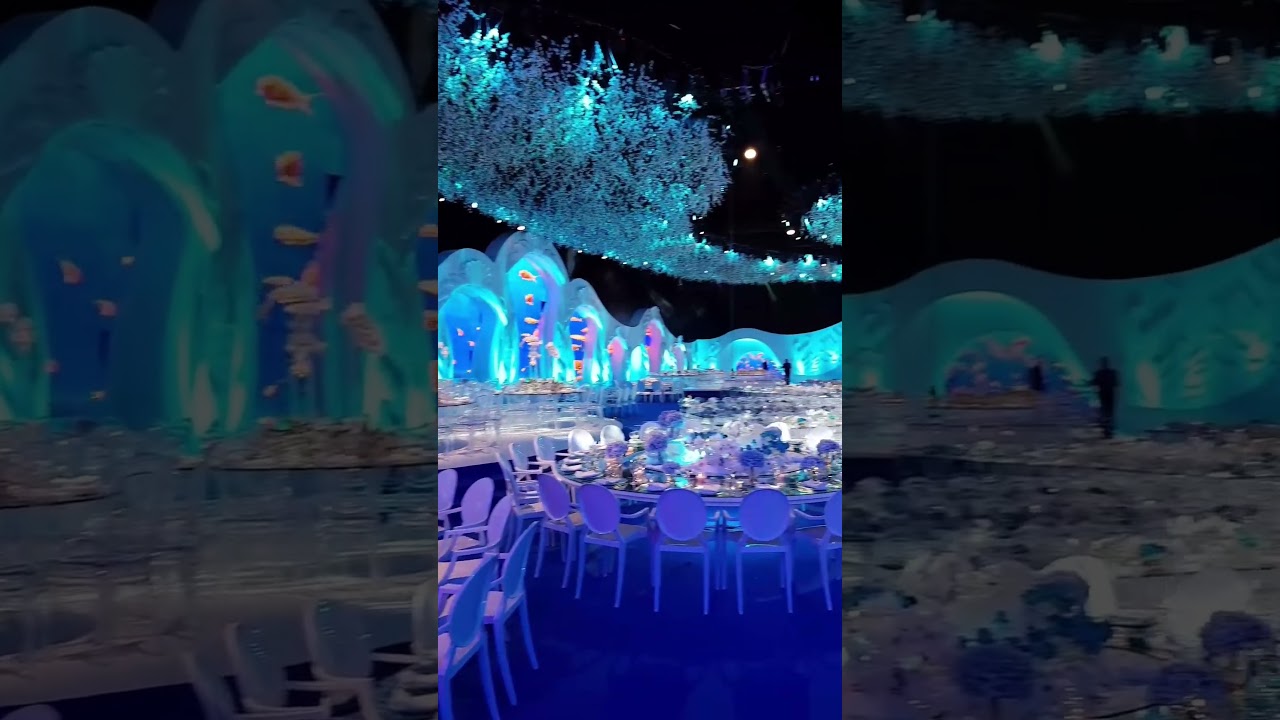
The hidden lines in a rental quotation
The hire rate is rarely the whole hire cost. These are the lines that appear after confirmation, and every one of them is standard rather than sharp practice — they just need to be in the quotation before you sign, which is a point we make at length in what to ask a wedding decorator before booking.
| Line | Typical range | When it applies |
|---|---|---|
| Transport & lorry (Klang Valley) | RM350 – 1,600 per trip | Always; two trips if strike is a separate night |
| Install & dismantle labour | RM45 – 75 per crew-hour | Always; overnight rates apply after midnight |
| Same-night strike premium | RM800 – 3,500 | Hotels with a next-morning event booked |
| Damage / breakage deposit | 10–20% of hire value | Glassware, acrylic, upholstered furniture |
| Refresh or re-skin charge | RM600 – 4,000 | Fabric, printed panels, anything colour-matched |
| Exclusivity hold | RM500 – 2,500 | So a signature piece is not at another wedding that weekend |
| Venue vendor access / supervision fee | RM400 – 2,000 | Charged by the hotel, not the decorator |
| Standby crew during event | RM250 – 700 per person | Floral installations and anything suspended |
Added together on a mid-range brief these lines commonly run RM4,000–9,000. On a quotation where the hire rates looked 20% cheaper than a rival's, they are frequently the reason.
Lead times: the factory calendar decides this, not your taste
This is where most couples lose the option rather than choose against it. Anything fabricated in our own factory in China and shipped by sea needs a working window that is longer than people expect:
| Weeks before the event | What has to be locked |
|---|---|
| 14–12 weeks | Concept approved, final drawings and material specification signed off |
| 12–9 weeks | Factory production, sample photographs approved, finishes confirmed |
| 9–5 weeks | Sea freight — 25 to 35 days port to port, Shenzhen or Guangzhou to Port Klang |
| 5–4 weeks | Customs clearance and haulage, 3 to 7 working days, longer over festive periods |
| 4–2 weeks | Local assembly, dry-fit, touch-up paint, test build of the full structure |
| 2 weeks – event | Site survey reconfirmed, load-in slot booked with the venue, contingency |
Miss that window and there are two honest options: air freight, which typically adds 4 to 8 times the sea-freight cost and can erase the entire price advantage of overseas fabrication, or local workshop build, which is fast (2–4 weeks) but prices carved, moulded and CNC-heavy work at roughly 1.8 to 2.5 times the delivered factory cost. A carved 6m feature wall that lands around RM26,000 via sea freight commonly quotes RM45,000–58,000 built locally in four weeks.
Two Malaysian calendar notes worth putting in a diary. Chinese New Year shuts most mainland factories for 15 to 20 days, so anything for a February to April wedding must be in production before mid-January. And the pre-Raya and pre-Deepavali weeks compress both haulage and local crew availability — a load-in that normally takes six hours gets quoted at eight.
Hiasan perkahwinan: sewa atau bina khas?
For Malay weddings the question splits by component, and it splits differently to a Western ballroom brief. The pelamin itself is the most heavily rented item in the Malaysian decoration market — there is enormous, well-maintained stock across the Klang Valley in every style from traditional carved to minimalist arch, and hiring a strong one at RM4,500–12,000 will nearly always beat building. Our pelamin design ideas guide covers the styles currently in circulation.
Where custom earns its money in a majlis perkahwinan is everywhere the pelamin isn't:
- Hantaran trays and dulang — almost always bespoke, because they are photographed close up and carry the couple's colour story. RM90–380 per tray for dressing, more for carved or beaded work.
- The pelamin backdrop panel as opposed to the frame — re-skinning a rented frame with a new printed or fabric panel costs RM1,200–4,500 and reads as entirely custom in photographs.
- Entrance and kompang welcome area — usually a build, because every dewan entrance has different proportions.
- Dewan ceiling treatment — draping is rented by the metre, but any structure hung below a dewan's ceiling fans has to be designed around them, and that is fabrication.
The venue type shifts the answer too: a dewan hands you a bare shell and pushes budget toward structure, while a hotel ballroom hands you finished surfaces and pushes budget toward the photographed items. We set that comparison out fully in hotel ballroom vs dewan wedding decoration.
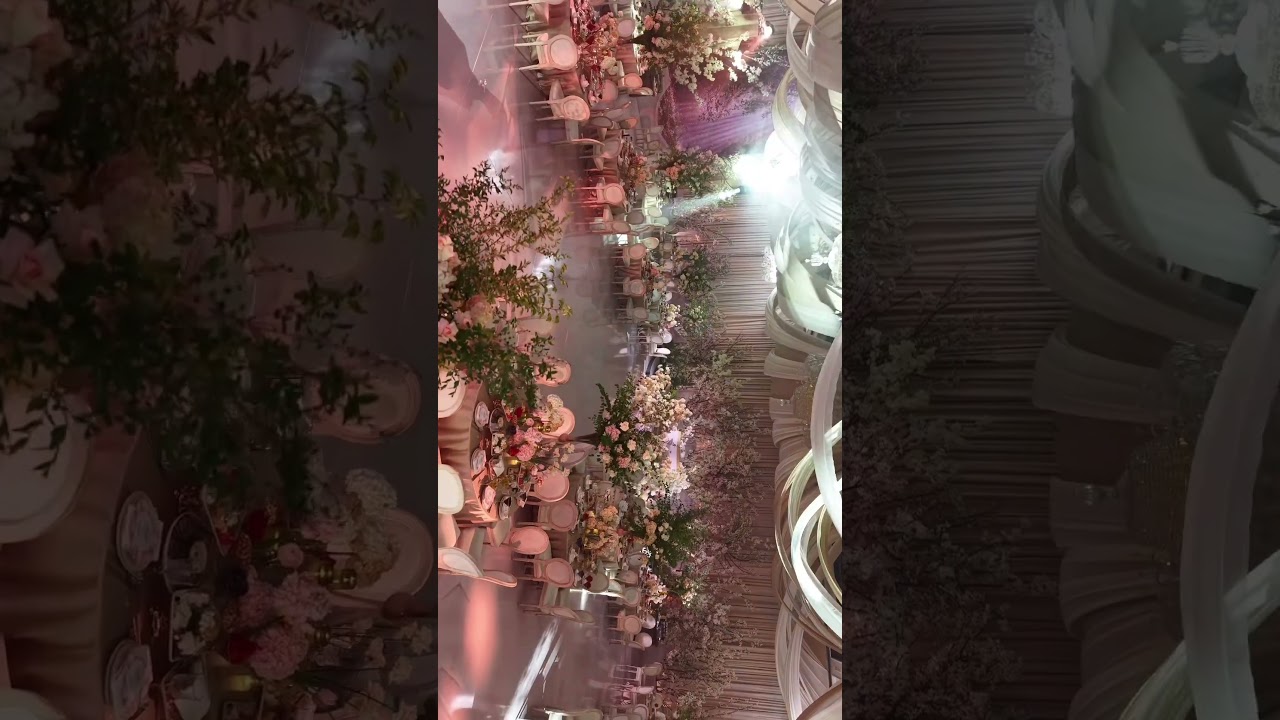
Materials: what survives a second wedding and what doesn't
If you are commissioning a build, these are the specification decisions that determine whether the piece is an asset or a one-night expense in Malaysian conditions.
- Acrylic above 900mm must be 5mm, not 3mm. Three-millimetre sheet bows visibly in a warm ballroom and the bow shows on camera as a wobble in the reflection.
- Powder-coated steel beats raw or painted steel for anything that will be stored. Raw steel spots with rust in an unconditioned warehouse within a single wet season.
- Aluminium truss is worth the premium only if the piece will be repeatedly rigged; for a freestanding one-off, welded steel with a ballast base is cheaper and more stable.
- Painted MDF and plywood are fine for a single event and poor for reuse — corners chip in transit and every chip needs filling and respraying.
- Design to 2.1m panels. Most hotel service lifts in Kuala Lumpur cap panel height around 2.1m, so a 4m feature wall that cannot split into sections will not physically reach the ballroom.
- Untreated natural material — dried grasses, raw rattan, unsealed timber — absorbs humidity and sags or discolours. Seal it or budget to replace it.
The hybrid most 400-pax budgets actually land on
In practice the winning brief rarely picks a side. It identifies the two or three items that will appear in every photograph and builds those, then rents everything else to a high standard. A workable split on a RM60,000 decoration budget:
| Category | Route | Share of budget |
|---|---|---|
| Stage backdrop — rented frame, custom skin | Hybrid | 28% |
| Fresh florals and installation | Buy-in, per event | 22% |
| Chairs, tables, linen, charger plates | Rental | 16% |
| Entrance and photo moment | Custom build | 12% |
| Lighting and power | Rental | 10% |
| Transport, labour, strike | Service | 9% |
| Signage and personalised details | Custom build | 3% |
Roughly 15% of that budget goes to fabrication, 26% to hire and the balance to consumables and labour — and the two fabricated items are the ones guests photograph. See finished examples in our showcase.
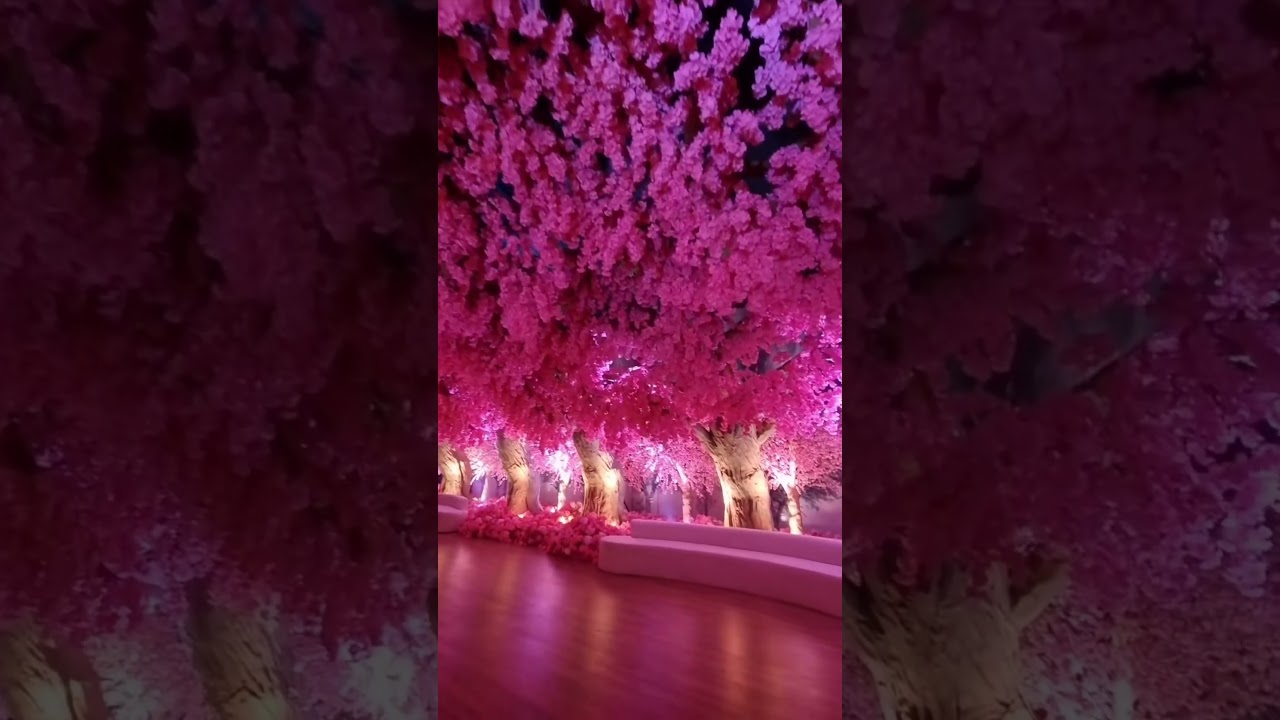
Eight mistakes that make the wrong choice expensive
- Deciding at eight weeks. By then the sea-freight route is closed and the only "custom" available is a local rush build at nearly double the price.
- Commissioning a generic piece. If a warehouse already stocks something similar, building it is spending RM9,000 to avoid a RM2,800 hire.
- Not asking who owns the finished piece. If the decorator retains it for their rental stock, ask for the discount that reflects it. It is usually 20–35% and it is usually available.
- Comparing a rental quote to a fabrication quote line by line. One is a per-event price, the other a per-lifetime price. They are not the same currency.
- Colour-matching by name. "Champagne" or "dusty rose" means a different thing in every warehouse. Match to a physical swatch or a Pantone reference, in writing.
- Assuming rented stock is available. Peak Saturdays in May, June, November and December clear out the good inventory months ahead. Hold the item, not the idea.
- Forgetting the strike. A custom piece has to leave the building too — and it has to go somewhere afterwards. Storage is a real cost if you own it.
- Building for a ballroom you have not measured. Ceiling height, pillar positions and service-lift dimensions have to be confirmed on a site survey before a drawing is signed off, not after.
Frequently asked questions
Is rental vs custom built wedding decoration purely a budget decision?
No. Budget sets the ceiling, but timing and uniqueness usually decide. If the concept exists in rental stock and the date is under ten weeks away, rental is both cheaper and lower risk. If the piece carries your names, your family's motifs or has to fit one room's exact proportions, fabrication is the only route that delivers it.
How much cheaper is renting wedding decoration in Malaysia?
Across the common categories a hire rate is typically 25–40% of the one-off build cost of the same piece. The exception is anything personalised — custom acrylic or LED signage costs only marginally more than a generic rental, which is why it is almost always built.
Can a rented backdrop be made to look custom?
Yes, and it is the standard approach at the premium end. Re-skinning a rented frame with new fabric, a new printed panel or fresh floral mechanics costs RM1,200–4,500 and is not distinguishable in photographs from a fully built piece.
What is the minimum lead time for custom fabricated wedding decoration?
Ten to fourteen weeks for factory production plus sea freight to Port Klang. Local workshop builds compress to two to four weeks but price carved and moulded work at roughly 1.8 to 2.5 times the delivered factory cost.
Do I keep the piece if I pay for a custom build?
Only if the contract says so. Many quotations assume the decorator retains the item for future hire, which is legitimate — but it should be priced as a discount to you. Settle ownership, storage and any future-use rights in writing before the deposit.
Deciding what to rent and what to build?
We design, fabricate in our own factory and install across Kuala Lumpur, Selangor and nationwide — so we can price both routes honestly on the same brief.