Indian Wedding Decoration Ideas Malaysia Couples Are Booking in 2026
Most Indian wedding decoration ideas Malaysia couples save to Pinterest were photographed in Chennai, Jaipur or Dubai — in a dry climate, in a hall with rigging points, at an hour the photographer chose. In Klang Valley the priest chooses the hour, the temple owns the walls, and the air holds 80% humidity at dawn. This guide covers what actually gets built here: manavarai and mandap options with real RM bands, temple and dewan rules, which flowers survive a Malaysian morning, and the production timeline a 6am muhurtham forces on everyone.
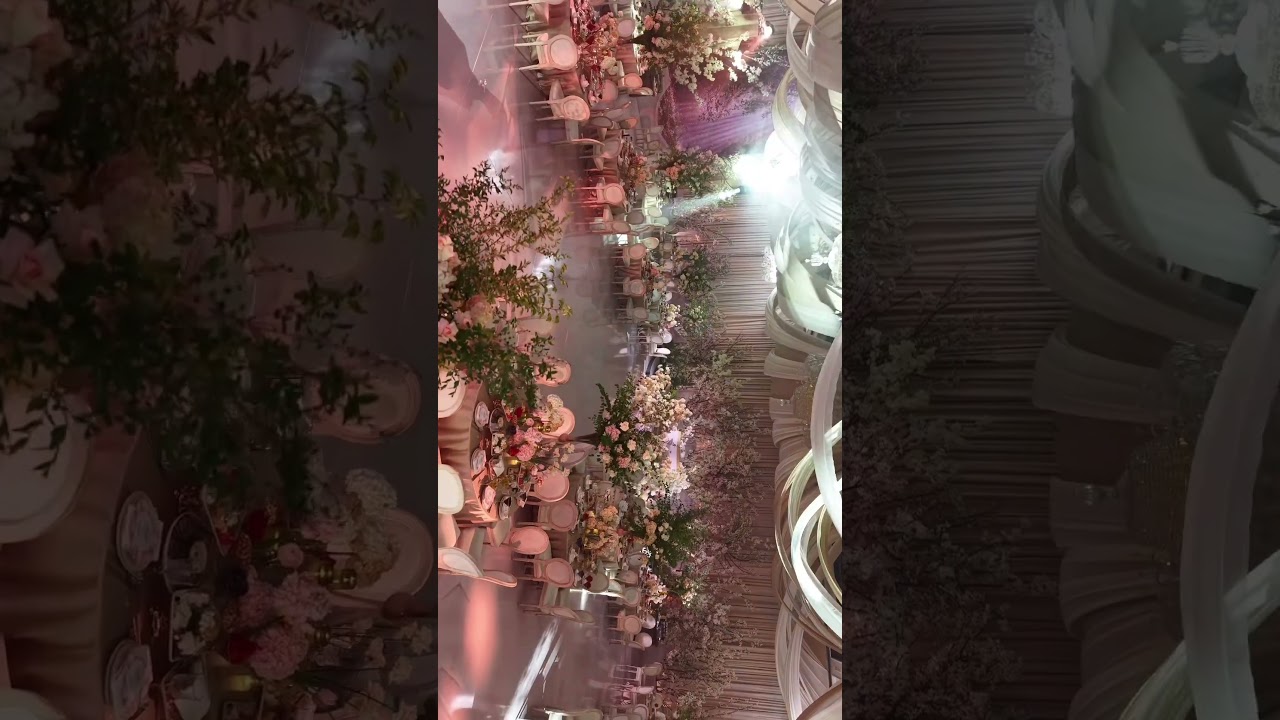
One wedding, five events, five separate decoration briefs
Couples pricing decoration for the first time are surprised to learn they are not buying one setup. A Malaysian Indian wedding runs across three to five distinct functions, often in three venues, sometimes across two weekends — each with its own install, crew call and strike. The budget never splits evenly: the reception routinely absorbs 45–60% of total spend even though the ceremony is the religiously significant event, because the reception is the one shot in flattering light, in a controlled room, with the full guest list present.
| Function | Usual Klang Valley venue | Typical time | What decoration covers | Indicative spend |
|---|---|---|---|---|
| Nichayathartham (engagement) | Home, temple hall, small dewan | Late morning | Small seating dais, tray and thattu styling, entrance thoranam | RM1,800 – 6,500 |
| Sangeet / Mehndi | Hotel function room, restaurant, garden | Evening | Low seating, drape, lounge furniture, entrance, lighting, dance-floor wash | RM6,000 – 28,000 |
| Kalyanam / Muhurtham | Temple or dewan | 6.00am – 11.00am | Manavarai, homam area, aisle, entrance, banana trees, kolam, guest floral | RM12,000 – 65,000 |
| Reception | Hotel ballroom | 7.00pm – 11.00pm | Stage and backdrop, aisle, centrepieces, entrance arch, full lighting design | RM25,000 – 120,000 |
| Post-wedding house function | Home or community hall | Varies | Entrance, small dais, table styling | RM1,200 – 5,000 |
If your total decoration budget is under RM30,000, the honest advice is to pick one function to build properly and keep the others to entrance-and-seating level. Spreading RM30,000 across five setups produces five thin rooms. Our event and wedding design service is usually scoped this way — one hero build, the rest supporting.
Indian wedding decoration ideas Malaysia designers build for a 6am muhurtham
The muhurtham — the auspicious window the priest sets from the panchangam — is not negotiable. For South Indian ceremonies in Malaysia it frequently lands between 6.00am and 11.00am, and pre-dawn slots are common. Nothing in the production plan survives contact with that fact unless you plan backwards from it.
The chain runs backwards from it. Guests seat 45 minutes before the muhurtham. The nadaswaram and thavil ensemble must be in position before that. Floral goes on last because it wilts. Structure is therefore finished and lit the night before.
Practical consequences most couples are never told:
- Ask the venue for overnight access in writing before you sign. Temple halls often allow it; hotel function rooms with a prior evening booking frequently do not.
- Security and lift access at 1am is a separate arrangement at most buildings, and at some it carries an after-hours charge.
- Petals, garlands and jasmine are collected at 4.00–5.00am from the flower traders around Jalan Tun Sambanthan and Klang — not the afternoon before. This is a logistics line item, not an afterthought.
- A sunrise ceremony has no usable daylight. You are lighting the manavarai entirely artificially, and the hall's own 5000K tubes will make every warm fabric read grey. Budget for your own warm wash.
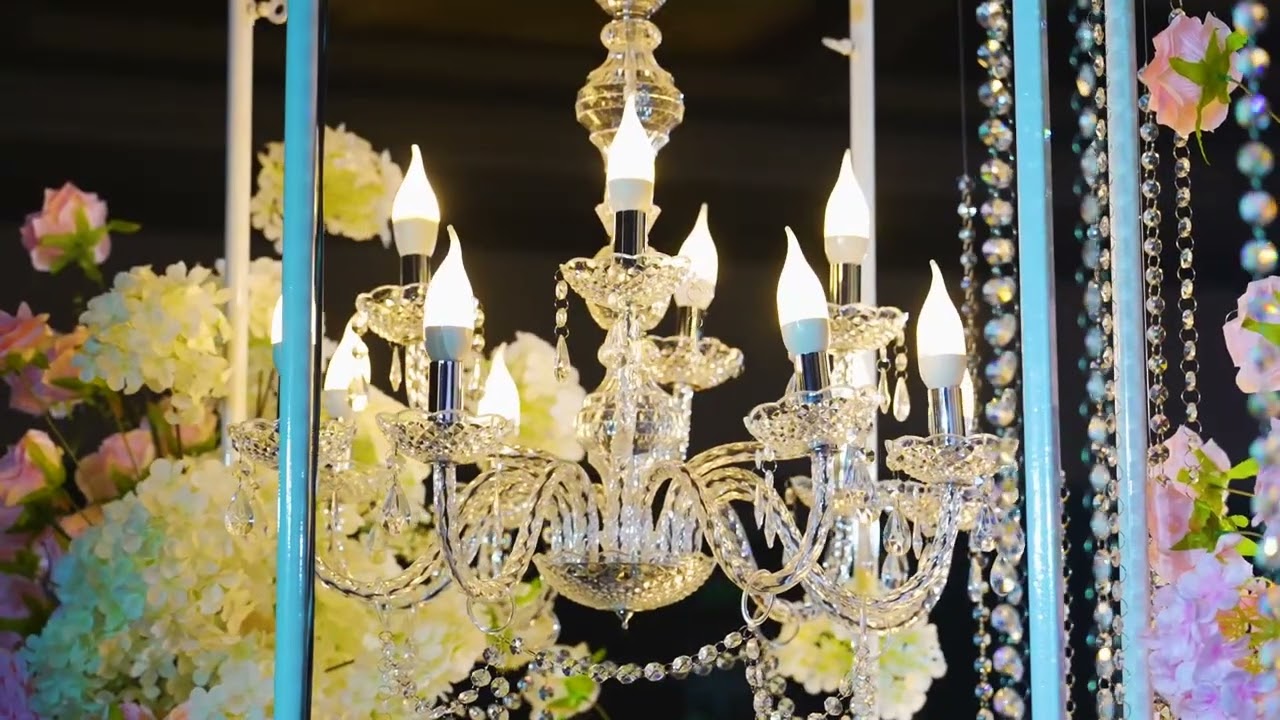
The manavarai is not a mandap — and the difference matters
Most Malaysian Indians are Tamil, and the correct term for the Tamil wedding dais is manavarai. Mandap is the North Indian and Sanskrit term for a four-pillared canopy with a central fire. They are not interchangeable in form: a manavarai is a raised, canopied platform read from the front; a mandap is freestanding and read from all four sides. Brief a decorator with the wrong word and you get the wrong drawing.
Five build types cover almost everything that goes up in Klang Valley. What separates them is ceiling height, build hours, and whether the venue will let you drill anything (usually: no).
| Build type | How it stands up | Ceiling height needed | On-site build | Indicative cost |
|---|---|---|---|---|
| Traditional bamboo, banana stem, thoranam | Lashed frame, ballasted, no fixings | 3.0 m | 4 – 6 hrs | RM3,500 – 9,000 |
| Box truss with fabric drape and floral accents | Bolted truss, water-barrel ballast | 3.5 m | 5 – 8 hrs | RM9,000 – 26,000 |
| Modern acrylic, mirror and metal | Flat-packed panels on steel frame | 3.0 m | 4 – 7 hrs | RM12,000 – 34,000 |
| Carved temple facade, factory-fabricated | Flat-packed modules, bolted on site | 3.6 m+ | 6 – 10 hrs | RM18,000 – 55,000 |
| Full fresh-floral clad | Frame plus foam or mesh cladding | 3.2 m | 8 – 14 hrs | RM22,000 – 80,000 |
The carved-facade route is where having a factory changes the maths. Because we fabricate our own modules in China and flat-pack them for sea freight, a carved column that would be priced as a one-off local carpentry job becomes a repeatable panel — which is how a temple-facade look lands closer to RM20,000 than RM50,000. Lead time is the trade: sea freight needs 8–10 weeks before the date. Examples sit in our showcase.
The oonjal, and why it is the most underestimated item on the list
The oonjal — the swing ceremony — needs a swing that carries two adults, and virtually no Malaysian venue will let you hang load from the ceiling. That means a freestanding A-frame or portal frame with ballast, which is a structural item, not a decorative one. Expect RM1,800–5,500 for a properly engineered, dressed oonjal frame, and a footprint of roughly 2.4m × 1.2m that has to be designed into the floor plan from the start rather than squeezed in the week before.
Hiasan majlis perkahwinan India di dewan dan kuil
Temple and dewan ceremonies obey rules a hotel ballroom does not, and the rules are enforced by people with no commercial interest in your photographs.
Temples. At Sri Mahamariamman Temple on Jalan Tun H S Lee, Sri Kandaswamy Kovil in Brickfields and Sri Subramaniar Swamy Temple at Batu Caves, the built fabric is fixed and consecrated. Nothing may be drilled, nothing may obstruct the sightline to the sanctum, and decoration is generally confined to the marriage hall and entrance rather than the prakaram. Approval usually comes from the temple committee, not the hall booking clerk — ask for the committee, and ask early.
Dewan and community halls. A dewan hands you four walls and little else. The recurring problems are the same as any bare-shell hall: single-phase 13A supply that will not carry a lighting rig without a genset, ceiling fans hanging at roughly 3m dead centre where your canopy wants to be, and non-dimmable 5000K tubes. The compensation is real: one to two days of access, and permission to build properly. We covered the economics of this in detail in our comparison of hotel ballroom versus dewan wedding decoration.
Gurdwaras. For a Sikh Anand Karaj at Gurdwara Sahib Petaling Jaya or Tatt Khalsa in Kuala Lumpur, the decoration brief is deliberately small. Nothing may be placed higher than the Guru Granth Sahib, floral is typically limited to the palki sahib and arranged in consultation with the committee, heads are covered and shoes removed — which also means your crew works barefoot and cannot roll cases across the darbar hall. Sikh couples generally move the design budget to the entrance, the langar area and the evening reception, where there are no such restrictions.
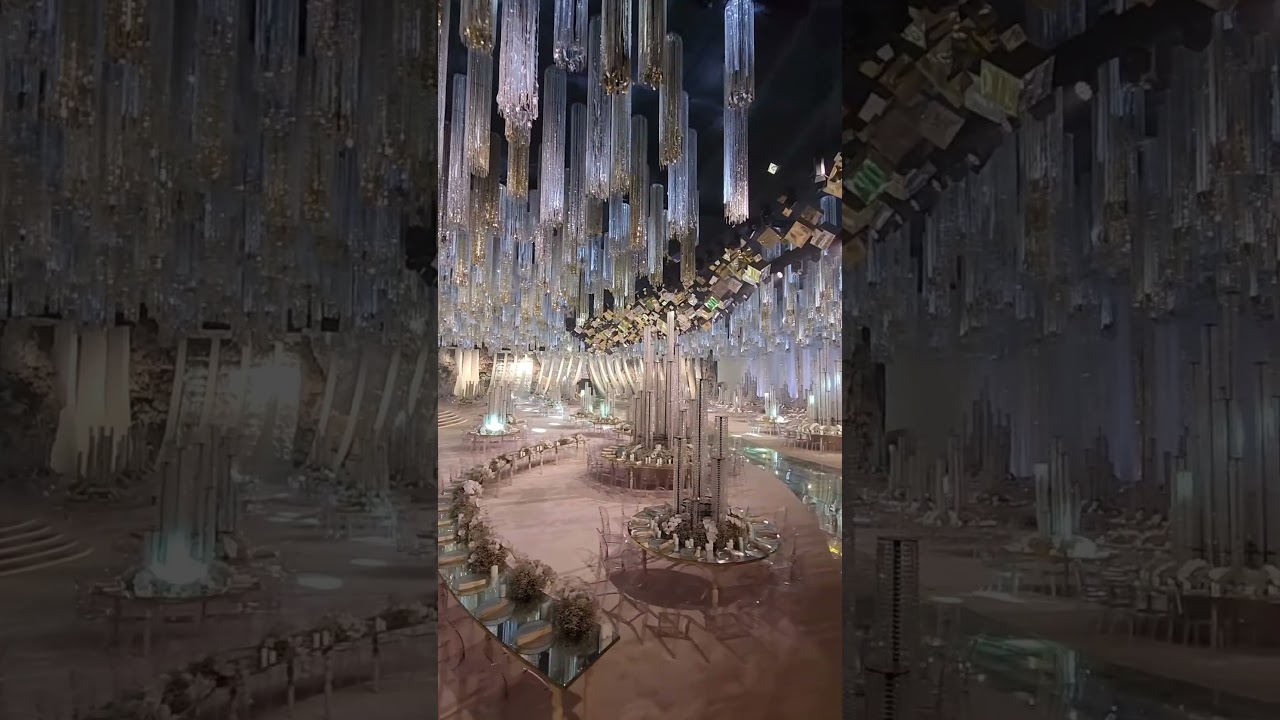
Flowers and natural materials that survive a Klang Valley morning
Malaysian humidity sits between 70% and 90% most of the year, and a dewan at 7am with two hundred bodies in it is warmer and wetter than the street outside. Figures below are indicative bands; the tolerance column is hours out of a cooler before the material visibly turns in photographs.
| Material | How it is bought | Indicative RM | Hours before it shows | Behaviour note |
|---|---|---|---|---|
| Jasmine (malligai) | By the muzham, roughly a forearm length | RM8 – 18 | 4 – 6 | Browns at the petal tip first. Collect the morning of, never the day before. |
| Marigold (samanthi) | By the kilo or ready-strung garland | RM18 – 35 / kg | 10 – 14 | The heat workhorse. Carries volume cheaply and holds colour. |
| Rose garland (maalai), pair | Per pair, made to order | RM280 – 750 | 6 – 8 | Keep boxed and cool until the exchange itself. |
| Tuberose (sampangi) | Per bundle | RM25 – 45 | 5 – 7 | Scent disappears fast under aircon; buy it for the ceremony, not the ballroom. |
| Banana tree (vaazhai), pair | Per pair, cut to order | RM120 – 260 | 8 – 10 in direct sun | Must be cut within 24 hours. A tree cut two days early droops on camera. |
| Mango leaf thoranam | Per metre, strung | RM12 – 25 | 12 – 18 | Edges curl but still read correctly in photographs. Very forgiving. |
| Local orchid | Per stem | RM3 – 7 | 12+ | The humidity insurance. Blend into any arrangement that must last past noon. |
Two seasonal warnings. Jasmine and marigold prices spike hard around Thaipusam and Deepavali — if your date sits within ten days of either, assume a 30–60% premium on those two lines and lock the order early. And imported marigold arriving from India or Thailand needs a 10–14 day confirmation window against 3–5 days for Cameron Highlands and local growers. We went deeper into species tolerance in our guide to tropical wedding flowers in Malaysia.
Entrance, kolam and the photo moments that actually get shared
The entrance is the highest-return square metre at any Indian wedding: every guest passes through it, phone already out, before they sit down and stop taking pictures. The classic components carry real meaning and happen to photograph well.
- Vaazhai maram. A pair of fresh banana trees flanking the doorway. Fix them to weighted bases, not to the door frame — venues object, and a toppling tree at 6am is a bad start.
- Thoranam. Mango leaves strung across the lintel. Hang at 2.1m minimum so nobody walks into it.
- Kolam. Rice flour is traditional and correct; coloured powder holds longer; fresh petals photograph best and last about four hours on a dry floor. Choose by how long it must survive, and never lay a powder kolam on a route the catering trolleys use.
- Purna kumbham and arathi station. A small dressed table for the welcome ritual. It needs light on it — this is where the couple is photographed arriving, and it is almost always the darkest corner of the room.
- A named backdrop. One deliberate, well-lit surface at 2.4m × 2.4m minimum for group photographs. Without it, guests photograph against the fire escape.
Colour is the other lever, and it is more tradition-specific than most mood boards admit.
| Tradition | Anchor palette | What to avoid |
|---|---|---|
| Tamil / South Indian ceremony | Turmeric yellow, deep maroon, temple gold, off-white | Cool silvers — they fight the gold jewellery |
| North Indian ceremony | Marigold orange, fuchsia, red, brass | Muted pastels at scale; they disappear under warm light |
| Sikh Anand Karaj | Ivory, saffron, soft gold | Anything elevated or theatrical inside the darbar hall |
| Reception (any tradition) | Whatever the couple wants — this is the free space | Repeating the ceremony palette exactly; the photos merge |

Fire, smoke detectors and the homam problem
The homam — the sacred fire — is the single most common point of failure between a Hindu ceremony and a hotel. Every luxury ballroom in Kuala Lumpur operates a strict open-flame policy. Some properties permit a contained homam kundam with conditions; others refuse outright and the ceremony has to move to a temple or dewan.
If a hotel does permit it, the conditions are consistent enough to plan for: a contained metal kundam on a heat-insulating base, a written indemnity, a fire-watch attendant, and isolation of the local smoke-detector zone arranged in advance with the hotel's engineering team. That isolation is a scheduled task with a named engineer, not a favour asked on the morning. Ventilation matters too — camphor and ghee produce more smoke than people expect in a sealed, air-conditioned room.
The same policy is why tall ceremonial candles, oil lamps and floating diyas are almost always replaced with LED-core equivalents in ballrooms. Good LED kuthu vilakku reproductions are now convincing enough that guests do not notice; cheap ones flicker at the wrong rate and read as plastic on camera.
Eight mistakes we see most often
Most Indian wedding decoration ideas Malaysia couples arrive with are perfectly sound. What fails is the production planning underneath them — and every item below has cost a real client real money.
- Booking the venue before confirming the muhurtham. The hour dictates access, crew calls and cost. Confirm it first.
- Assuming overnight access. Get it in writing. Without it, a dawn ceremony cannot be built well at any price.
- Briefing "mandap" when you mean manavarai. You will be quoted a four-sided structure you did not want.
- Designing the oonjal last. It is a load-bearing frame with a real footprint, not a prop.
- Buying jasmine the day before. Four to six usable hours. It will be brown in your photographs.
- Repeating the same palette at ceremony and reception. Two events, one album, and no visual distinction between them.
- Ignoring venue lighting colour temperature. Maroon and gold under 5000K house tubes read brown and grey. Warm wash is not a luxury line.
- Leaving the homam approval to the last fortnight. Indemnity, fire watch and detector isolation all need lead time, and a refusal at that point means relocating a ceremony.

Frequently asked questions
How much do Indian wedding decoration ideas Malaysia couples like actually cost?
For a full multi-function wedding in Klang Valley, realistic total decoration budgets run from about RM35,000 at the restrained end to RM180,000 and above for a large reception with a fresh-floral ceremony build. A single well-built hotel reception typically sits between RM25,000 and RM120,000 depending on stage scale, floral volume and lighting design. Our detailed breakdown of wedding decoration cost in Malaysia covers the line items.
Can I have a homam in a hotel ballroom in Kuala Lumpur?
Sometimes, and never by default. Policies differ by property. Where it is allowed, expect a contained kundam, a signed indemnity, a fire-watch attendant and pre-arranged smoke-detector isolation. Ask the hotel's banquet and engineering teams together, in writing, before you pay a deposit.
How far in advance should I book an Indian wedding decorator in Malaysia?
Six to nine months for a standard build. If you want factory-fabricated carved or moulded elements shipped in, add the sea-freight window — so eight to ten weeks of that lead time is production and transit, and the design has to be frozen before it starts.
What is the difference between a manavarai and a mandap?
A manavarai is the Tamil wedding dais: a raised, canopied platform designed to be read from the front, which suits most Malaysian Indian ceremony layouts. A mandap is the North Indian four-pillared canopy, freestanding and read from all sides, with the fire at its centre. They need different floor plans and different guest sightlines.
What should a Sikh couple spend their decoration budget on?
Not the darbar hall. Anand Karaj decoration is deliberately restrained and controlled by the gurdwara committee. Put the design budget into the entrance, the langar hall and the evening reception, where there are no restrictions and where the photographs people share are taken. Talk it through with us via our enquiry form.
Planning an Indian wedding in KL or Selangor?
We design, fabricate in our own factory and install across Kuala Lumpur, Selangor and nationwide — temples, dewan and every luxury hotel ballroom in the city. Send us your muhurtham and your venue, and we will tell you honestly what can be built in the time you have.